

Meta Ads vs Google Ads: Which Platform Gives Better ROI in 2026?
Digital advertising has become one of the most powerful ways for businesses to reach customers online. In 2026, two major advertising platforms dominate the digital marketing landscape: Meta Platforms Ads and Google Ads.
Both platforms offer advanced targeting, massive audiences, and powerful analytics tools. However, many businesses struggle with one important question: Which platform provides better return on investment (ROI)?
Understanding how these platforms work and how they differ can help businesses choose the right advertising strategy for their goals.
Understanding Meta Ads
Meta Ads refers to advertising across the platforms owned by Meta Platforms, including Facebook, Instagram, and other social platforms within the Meta ecosystem.
These ads appear in social feeds, stories, reels, and messaging apps, allowing businesses to reach users while they browse social content.
Key Features of Meta Ads
Advanced Audience Targeting
Businesses can target users based on demographics, interests, behaviors, and online activity.Visual Advertising Formats
Meta ads support images, videos, carousel ads, and interactive formats that attract user attention.Strong Brand Awareness Potential
Social media advertising is highly effective for building brand visibility and engagement.Retargeting Capabilities
Businesses can retarget users who previously visited their website or interacted with their content.
Because of these features, Meta Ads are especially useful for brand awareness, e-commerce promotion, and social engagement.
Understanding Google Ads
Google Ads is an advertising platform created by Google that allows businesses to display ads across search results, websites, and video platforms.
The platform includes several advertising types such as:
Search Ads
Display Ads
Shopping Ads
Video Ads on YouTube
Unlike social ads, Google Ads primarily target users who are actively searching for products or services.
Key Features of Google Ads
Intent-Based Advertising
Ads appear when users search for specific keywords.Immediate Traffic
Businesses can receive traffic almost instantly after launching campaigns.Extensive Advertising Network
Ads can appear across millions of partner websites and platforms.Strong Conversion Potential
Search ads often produce higher conversions because users already have purchase intent.
Google Ads works particularly well for lead generation, service businesses, and high-intent search traffic.
Meta Ads vs Google Ads: Key Differences
Understanding the differences between the two platforms helps businesses determine where to invest their advertising budget.
| Feature | Meta Ads | Google Ads |
|---|---|---|
| Targeting Style | Interest and behavior-based | Search intent-based |
| Ad Placement | Social media feeds and stories | Search results and websites |
| Best For | Brand awareness and engagement | Direct conversions and leads |
| User Intent | Passive discovery | Active searching |
| Speed of Results | Fast engagement | Fast conversions |
Both platforms can deliver strong results, but their effectiveness depends on business goals and campaign strategy.
ROI Potential of Meta Ads in 2026
Meta Ads often provide excellent ROI when campaigns focus on visual engagement and audience targeting.
When Meta Ads Perform Best
E-commerce product promotion
Brand awareness campaigns
Lifestyle and fashion brands
Visual storytelling through video and images
Because social platforms allow businesses to target users based on interests and behaviors, advertisers can reach highly specific audiences.
However, users on social media are typically not actively searching for products, which can sometimes result in lower conversion rates compared to search advertising.
ROI Potential of Google Ads in 2026
Google Ads typically generate strong ROI when targeting users who are already searching for solutions.
When Google Ads Perform Best
Local services (plumbers, dentists, consultants)
High-intent product searches
B2B lead generation
Urgent service needs
For example, if someone searches for “best digital marketing agency near me,” they already have strong purchase intent. Showing ads for that query can lead to higher conversion rates.
This intent-driven advertising often produces higher-quality leads.
Cost Comparison: Meta Ads vs Google Ads
Advertising costs vary based on competition, industry, and targeting.
Meta Ads Costs
Usually lower cost per click (CPC)
Lower barrier to entry for small businesses
Good for testing new audiences
Google Ads Costs
Higher CPC in competitive industries
Better conversion rates for high-intent searches
Strong ROI for service-based businesses
While Google Ads may cost more per click, the conversion value per customer can often be higher.
The Best Strategy: Using Both Platforms Together
In 2026, many successful businesses combine Meta Ads and Google Ads to maximize results.
Example Strategy
Use Meta Ads to build brand awareness and reach new audiences.
Retarget those audiences through Google Ads when they search for your product or service.
Use remarketing campaigns to convert interested users.
This combined approach allows businesses to benefit from both discovery marketing and intent-based advertising.
Measuring Advertising ROI
To determine which platform delivers better ROI, businesses should track key metrics such as:
Cost per click (CPC)
Cost per acquisition (CPA)
Conversion rate
Return on ad spend (ROAS)
Customer lifetime value (CLV)
Analyzing these metrics helps marketers optimize campaigns and allocate budgets effectively.
Conclusion
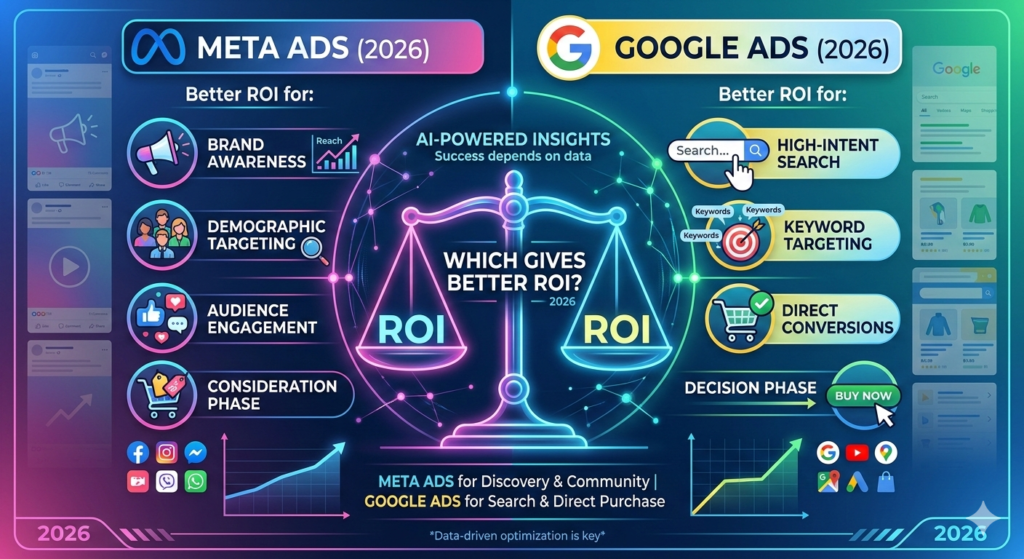
When comparing Meta Ads vs Google Ads in 2026, there is no universal winner. The best platform depends on your marketing objectives.
Meta Ads are excellent for brand awareness, social engagement, and visual marketing.
Google Ads are ideal for capturing high-intent traffic and generating conversions.
For most businesses, the smartest strategy is combining both platforms to build awareness, attract traffic, and convert customers.
By understanding the strengths of each platform and continuously optimizing campaigns, businesses can achieve stronger ROI and sustainable growth in the competitive digital marketing landscape.
Top SEO Trends in 2026 Every Business Should...