
How to Create an Authority Blog That Makes Money
Blogging has evolved far beyond personal journals or hobby sites. Today, an authority blog is a professional platform that builds trust, influence, and revenue in a specific niche. If done correctly, it can generate multiple income streams, attract loyal followers, and position you as a thought leader. In this guide, we’ll walk you through the step-by-step process to create an authority blog that makes money, without any shortcuts or harmful practices.
What Is an Authority Blog?
An authority blog is not just any website. It’s a platform recognized for expertise, trustworthiness, and high-quality content in a particular niche. Authority blogs often:
Provide in-depth, valuable content that solves real problems
Have a consistent publishing schedule
Use data-driven strategies to engage readers
Build credibility through guest posts, backlinks, and partnerships
The goal is to become a go-to resource that readers rely on, which naturally attracts traffic and monetization opportunities.
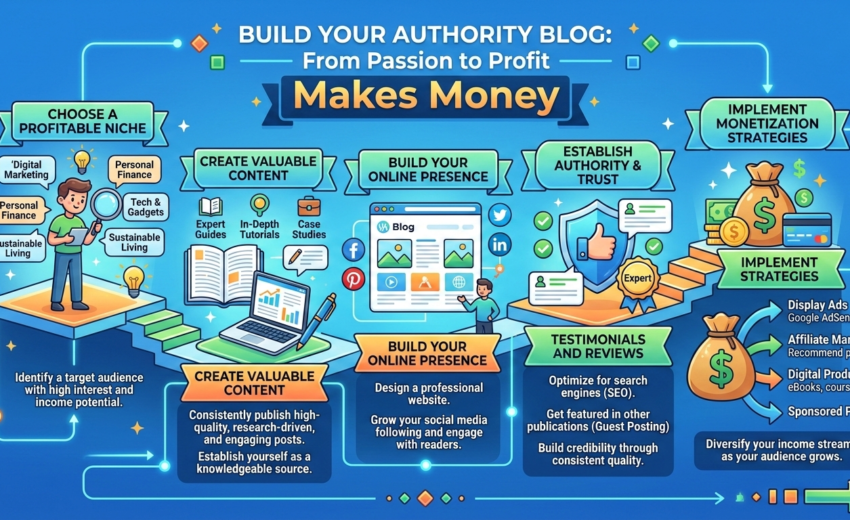
Step 1: Choose a Profitable Niche
Your niche is the foundation of your authority blog. It should balance passion, expertise, and profitability.
Tips to select a niche:
Identify your expertise and interests – You’ll create content consistently if you enjoy the topic.
Research demand and competition – Use tools like Google Trends, Ahrefs, or SEMrush to find niches with traffic potential.
Check monetization opportunities – Some niches naturally earn through affiliate marketing, sponsored posts, or digital products.
Examples of profitable niches:
Personal finance
Health and fitness
Digital marketing
Travel guides
Tech and gadgets
Step 2: Build a Professional Website
A professional website builds trust and credibility.
Steps to create your blog:
Choose a domain name – Make it memorable, brandable, and relevant to your niche.
Select reliable hosting – Use providers like Bluehost, SiteGround, or Hostinger.
Use a CMS like WordPress – WordPress is flexible, SEO-friendly, and scalable.
Design your blog professionally – Use responsive themes, clear navigation, and fast loading times.
Install essential plugins – Examples include SEO plugins (Yoast or Rank Math), caching tools, and security plugins.
A clean, user-friendly website keeps readers engaged and encourages repeat visits.
Step 3: Create High-Quality, SEO-Optimized Content
Content is the core of an authority blog. It must educate, inspire, or solve problems.
Content creation tips:
Conduct keyword research for SEO-friendly topics
Write long-form, detailed articles (1,500–3,000 words) that provide real value
Use headings, bullet points, and images to improve readability
Include actionable tips, examples, and case studies
Update old content regularly to keep it relevant
Types of content that boost authority:
How-to guides and tutorials
In-depth industry analysis
Expert interviews
Case studies and research-backed posts
Listicles with actionable insights
Step 4: Build Your Audience
An authority blog thrives on a loyal audience.
Strategies to grow your readership:
Email Marketing – Offer lead magnets (e.g., free guides, checklists) to build a subscriber list.
Social Media Promotion – Share content on platforms like LinkedIn, Instagram, Twitter, or Pinterest.
Guest Posting – Write on other reputable blogs to attract traffic and backlinks.
Engage With Readers – Reply to comments, host webinars, and create polls or surveys.
Consistent engagement increases credibility and trust in your niche.
Step 5: Monetize Your Authority Blog
Once your blog gains traffic and authority, it can generate revenue in multiple ways:
Affiliate Marketing – Promote products or services and earn commissions.
Display Ads – Use networks like Google AdSense or Mediavine to monetize traffic.
Sponsored Content – Partner with brands for paid blog posts.
Digital Products – Sell eBooks, online courses, or templates.
Consulting or Coaching – Offer personalized services based on your expertise.
Diversifying income streams ensures stability and long-term profitability.
Step 6: Build Backlinks and Authority
Backlinks from reputable sites improve your SEO and authority.
Effective strategies:
Guest post on high-authority blogs
Collaborate with influencers in your niche
Create link-worthy content like ultimate guides or infographics
Participate in relevant forums and communities
The more high-quality backlinks you earn, the higher your site will rank in search engines, attracting organic traffic.
Step 7: Track Performance and Optimize
Continuous optimization is key to maintaining authority and revenue.
What to track:
Traffic sources and top-performing pages
Bounce rate and session duration
Conversion rate for email signups or product sales
Keyword rankings and organic search traffic
Use tools like Google Analytics, Google Search Console, and SEO software to identify what works and what needs improvement.
Bonus Tips for Success
Consistency is king – Publish regularly to maintain credibility.
Stay updated – Follow trends and industry news in your niche.
Invest in tools – Use SEO, email, and analytics tools to scale your efforts.
Focus on value, not shortcuts – Avoid spammy tactics or black-hat SEO practices.
Engage with your community – Forums, social media, and newsletters strengthen trust and loyalty.
Conclusion
Creating an authority blog that makes money is a journey of dedication, strategy, and value creation. By choosing the right niche, building a professional website, producing high-quality content, growing an audience, and monetizing strategically, you can transform a simple blog into a trusted platform that generates revenue.
Remember, success doesn’t happen overnight. Consistency, authenticity, and a focus on providing real value are the keys to building a profitable authority blog.