

Local SEO Strategies for Small Businesses
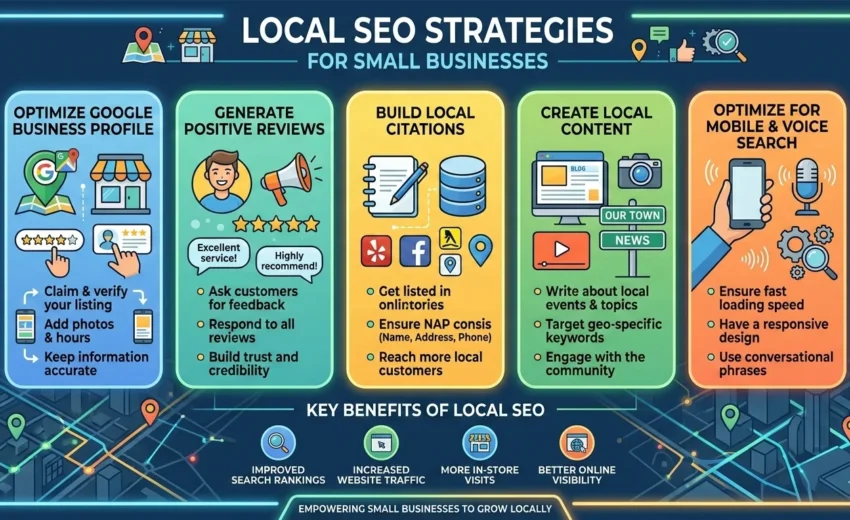
In 2026, implementing Local SEO Strategies for Small Businesses is essential for attracting nearby customers and boosting online visibility. Small businesses that optimize their websites and local listings using these proven techniques can increase foot traffic, improve search rankings, and gain a competitive edge in their communities.
This comprehensive guide covers actionable strategies, tools, and best practices to help small businesses dominate local search results and grow sustainably.
Why Local SEO Strategies for Small Businesses Matter in 2026
Local SEO ensures your business appears in location-based searches when potential customers look for products or services near them.
Benefits include:
Increased visibility on Google Maps and local search results
Higher trust and credibility through consistent online information
Greater foot traffic and sales from local customers
Competitive advantage over businesses not investing in local SEO
For small businesses in 2026, ignoring local SEO can mean losing customers to competitors who have optimized their online presence.
Step-by-Step Guide to Local SEO Strategies for Small Businesses
Implement these steps to improve your local search performance:
1. Optimize Google Business Profile (GBP)
Your GBP is the most critical local SEO asset.
Checklist:
Claim and verify your GBP listing
Ensure NAP consistency (Name, Address, Phone Number)
Add high-quality photos and business hours
List services or products accurately
Encourage and respond to customer reviews
A fully optimized GBP increases your chances of appearing in the local pack on Google Maps and search results.
2. Maintain NAP Consistency Across Platforms
Search engines rely on consistent business information.
Checklist:
Use the exact business name, address, and phone number everywhere
Update directories like Yelp, Bing Places, and TripAdvisor
Avoid abbreviations or variations that can confuse search engines
Consistency builds trust and improves your local search rankings.
3. Build Local Citations and Backlinks
Citations and backlinks from reputable local sources enhance authority.
Checklist:
Submit your business to local directories and chambers of commerce
Collaborate with local blogs, news sites, and business organizations
Ensure all citations are accurate and consistent
High-quality local backlinks strengthen your website’s credibility in search results.
4. Optimize Your Website for Local SEO
Your website must support local search queries effectively.
Checklist:
Include city or region keywords in titles, headers, and meta descriptions
Create location-specific landing pages if you have multiple locations
Use LocalBusiness schema markup to highlight location, business type, and contact info
Ensure fast load times and mobile responsiveness
A website optimized for local search boosts both organic and map rankings.
5. Encourage and Manage Customer Reviews
Reviews directly impact local rankings and customer trust.
Checklist:
Request reviews from satisfied customers on Google and other platforms
Respond professionally to all reviews
Showcase positive reviews on your website and social media
Customer feedback improves your reputation and strengthens local SEO.
6. Create Localized Content
Localized content signals relevance to search engines.
Checklist:
Write blog posts about local events or news
Highlight local customer success stories
Use location-based keywords naturally in content
Include images or videos from your business location
Localized content increases engagement and search visibility.
7. Optimize for Mobile Users
Most local searches happen on mobile devices.
Checklist:
Implement responsive design
Ensure buttons and menus are easy to navigate on small screens
Optimize images and reduce page load time
Make contact info and directions prominent
Mobile optimization ensures a better user experience and higher conversion rates.
8. Leverage Social Media for Local Engagement
Social media complements local SEO by boosting visibility and engagement.
Checklist:
Share location-specific posts on Facebook, Instagram, LinkedIn
Use relevant local hashtags
Promote local events or specials
Respond to follower messages promptly
Active social media engagement strengthens your local brand presence.
9. Track and Measure Local SEO Strategies for Small Businesses
Monitoring performance is key to ongoing success.
Checklist:
Track rankings for local keywords
Monitor website traffic and conversions from maps and search
Use tools like Google Analytics, Search Console, and BrightLocal
Adjust strategies based on performance data
Regular tracking ensures your local SEO strategies remain effective.
Conclusion
By following these Local SEO Strategies for Small Businesses 2026, small businesses can improve search visibility, attract more local customers, and grow their revenue. Focus on optimizing your Google Business Profile, maintaining NAP consistency, building local backlinks, creating localized content, and improving mobile experience.
Local SEO is no longer optional—it’s a critical component for small business success in 2026 and beyond.
SEO vs PPC – Which One Should You...
winpkr777game February 21, 2026
Alright, hear me out – winpkr777game! It’s been a blast playing there, seriously addicting. Give it a shot, you won’t regret it! Find the fun at winpkr777game.