In the digital marketing world, two strategies often dominate discussions: Search Engine Optimization (SEO) and Pay-Per-Click (PPC) advertising. Both are designed to drive traffic to your website, increase leads, and grow your business. However, they operate differently, have unique benefits, and are suited for different business goals. Understanding the key differences will help you decide which strategy—or combination of both—works best for your company in 2026.
1. What is SEO?
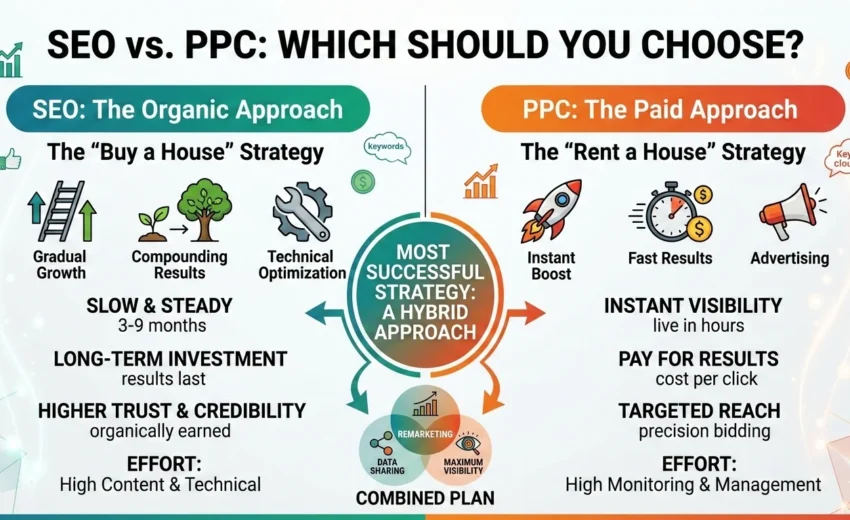
Search Engine Optimization (SEO) is the process of optimizing your website to rank organically on search engines like Google. SEO focuses on increasing visibility, attracting free organic traffic, and building long-term credibility.
Key Elements of SEO:
Keyword research: Finding the right search terms your audience uses
On-page SEO: Optimizing titles, meta descriptions, headings, and content
Off-page SEO: Building backlinks and social proof to improve domain authority
Technical SEO: Site speed, mobile optimization, structured data, and crawlability
Benefits of SEO:
Long-term results and sustainable traffic
Cost-effective in the long run compared to paid campaigns
Builds trust and authority with your audience
Supports local and mobile searches for small businesses
2. What is PPC?
Pay-Per-Click (PPC) advertising allows you to place ads on search engines or social platforms and pay each time someone clicks on your ad. Common platforms include Google Ads, Bing Ads, and social media platforms like Facebook and LinkedIn.
Key Elements of PPC:
Keyword targeting: Bidding on relevant keywords your potential customers are searching for
Ad creation: Writing compelling ad copy and designing visually engaging ads
Landing pages: Optimizing pages to convert visitors into leads or customers
Budget management: Controlling daily spend and monitoring ROI
Benefits of PPC:
Immediate visibility in search results
Highly targeted audience based on demographics, location, or intent
Your business operates in competitive niches where authority matters
You have the resources for quality content creation
You aim for organic visibility in Google’s search results and local packs
Example: A small law firm creating in-depth articles about legal services to attract clients over time.
5. When to Choose PPC
PPC is ideal when:
You need immediate traffic and results
You are running time-sensitive promotions or offers
You want to target specific demographics or locations
You need quick testing for new products or campaigns
Example: An e-commerce store running a flash sale or promoting a new product launch.
6. Combining SEO and PPC for Maximum Results
Many businesses achieve the best results by using both SEO and PPC together.
Benefits of Combining Both:
Increased visibility: Appear in both organic and paid results
Faster testing: Use PPC data to inform SEO keyword strategy
Higher CTR: Paid ads can complement organic listings
Comprehensive coverage: Capture traffic from multiple sources
Example Strategy:
Use PPC for immediate leads while waiting for SEO content to rank organically
Analyze PPC keywords that convert best and create SEO-optimized pages around them
7. Cost Considerations
SEO Costs:
Content creation, tools, and occasional SEO expert or agency fees
Long-term ROI is often higher because traffic keeps coming after initial investment
PPC Costs:
Daily ad spend based on keyword bids and competition
Costs stop immediately if campaigns are paused
Choosing the right mix depends on budget, goals, and timeline.
8. Measuring Success
SEO Metrics: Organic traffic, keyword rankings, bounce rate, dwell time, conversion rate
PPC Metrics: Click-through rate (CTR), cost per click (CPC), cost per conversion, ROI
Use analytics platforms like Google Analytics, Google Search Console, and your ad platform reports to track both channels effectively.
Conclusion
Both SEO and PPC are essential components of a successful digital marketing strategy.
Choose SEO for long-term, sustainable traffic, authority, and brand credibility
Choose PPC for immediate visibility, targeted campaigns, and quick testing
Combine both to maximize reach, traffic, and conversions
In 2026, understanding the strengths of both strategies allows businesses to allocate budgets wisely, attract more customers, and stay competitive in a fast-paced digital landscape.



5mblink January 28, 2026
Just found 5mblink. Looks new. Gonna give it a try. Hope this link delivers some wins!